You did the hard part. You got on the medication, you lost the weight, and for the first time in years the scale moved in the right direction. And now there is a quieter fear underneath the relief. What happens when I stop?
I hear that question in my practice every week, almost always from a woman in her late forties or fifties. She is not asking whether the medication worked. It did. She is asking whether she is about to lose everything she gained the moment the dose comes down, and whether anyone has a plan for that part. Usually nobody does. Everyone had a plan for starting. Nobody had one for stopping.
Here is what I tell her, and what I want to tell you.
The fear is not irrational. When a GLP-1 stops, appetite and cravings come back to normal within weeks. Your metabolic rate does not come back with them. Fast weight loss on these medications takes muscle along with fat, and muscle is what burns calories at rest. So the body you are left with needs fewer calories to hold the same weight than it did before you started, at the exact moment your hunger returns. That is the rebound, and it is physiology, not weakness.
In menopause it is worse, for three reasons. Estrogen falling was already pulling muscle and bone down before you took a single dose, so the medication stacked one loss on top of another. Menopause had already moved fat storage to the middle, so the weight that comes back lands as the deep fat around the organs, the kind that matters for your heart and your blood sugar. And the medication never touched the hormonal shift that slowed your metabolism in the first place. Stopping means returning to a body that is wired to store fat, unless the habits that protect muscle and bone are already running.
That last clause is the whole point. Unless the habits are already running.
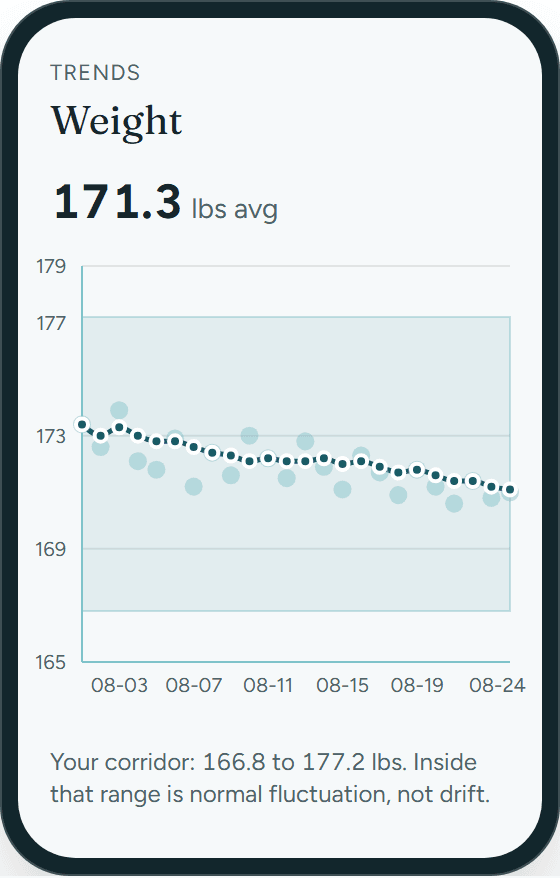
I have spent my career on menopause nutrition, and the last several years on this exact conversation: women on GLP-1s and what happens after the prescription ends. In my practice the protocol is not complicated. Protein at every meal, because it is the single biggest lever against muscle loss and the first thing to slip when appetite is quiet. Resistance training twice a week, because lifting is what tells your body to keep the muscle. Fiber and produce, because the gut changes in menopause too. And your weight watched as a trend inside a range, never as a daily verdict, because a menopausal body fluctuates with water, hormones, sleep, and a salty dinner, and a single morning on the scale tells you nothing.
The women who hold their weight after the medication are the ones who had that structure in place before the last dose. Not willpower. Structure. A few small things, done most days, with someone paying attention to the pattern.
The problem is that most women cannot see me every week, and a handout does not pay attention. So I built the thing I kept wishing my patients had between visits.
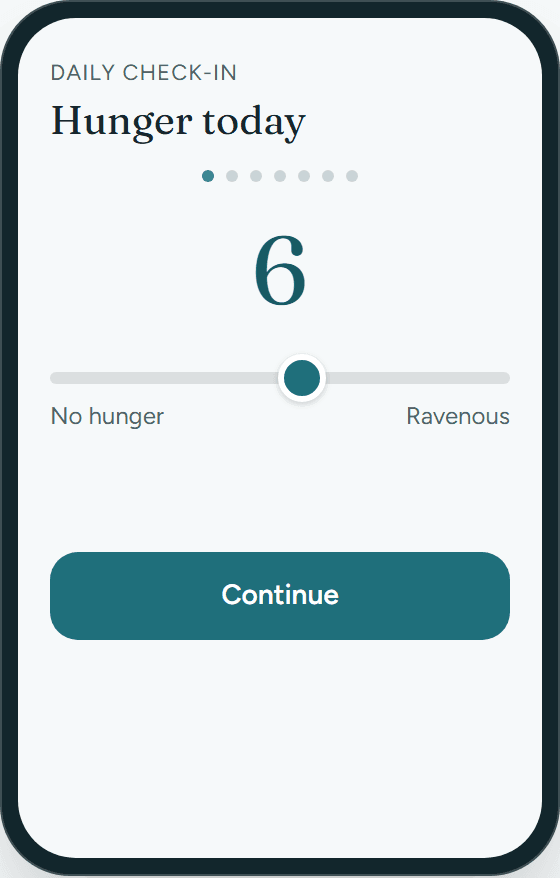
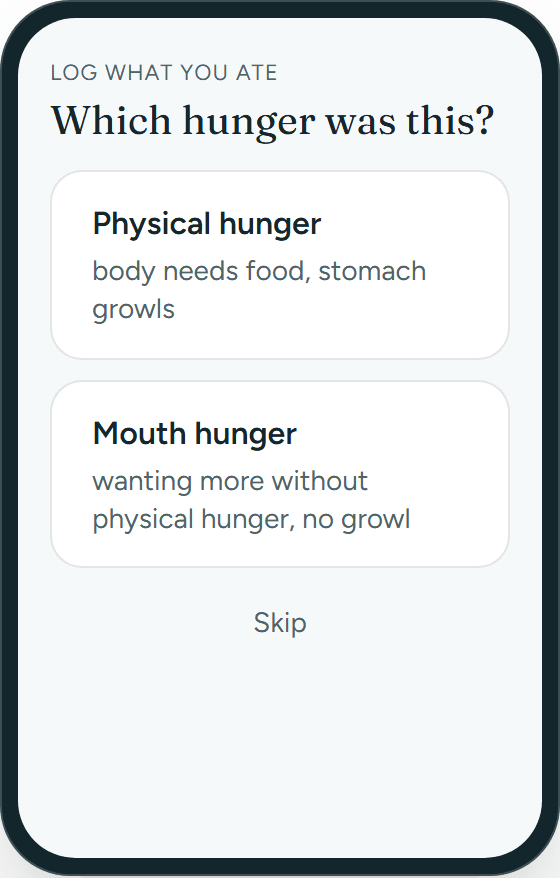
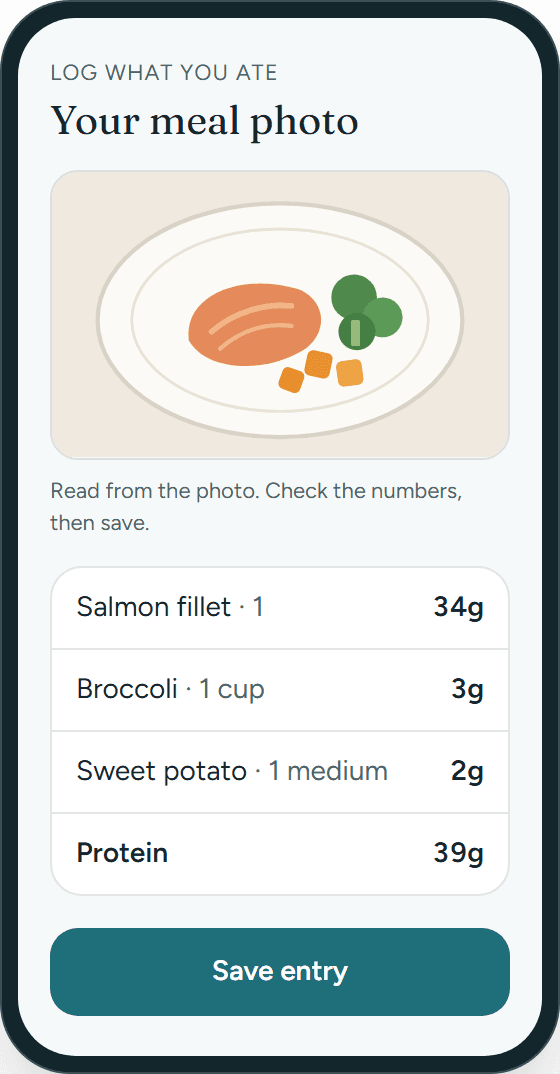
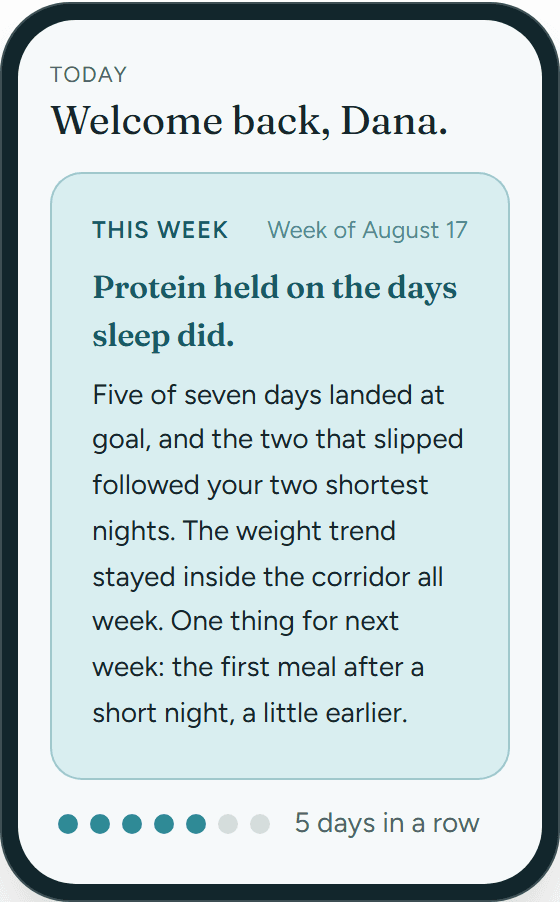
No Rebound is a two-minute daily check-in on my protocol. Four questions: protein, produce, movement, hunger. Your weight tracked in a corridor, a range around where you are now, with one quiet flag if the trend leaves it, so you catch drift in weeks instead of months. Food logging that takes a photo of your plate or a single sentence, no barcodes and no gram weights, with protein and produce read out for you. Every meal asks one question I ask my patients: is this physical hunger or mouth hunger? And every week, a short read in my voice on what actually moved and what only felt like it moved, built from your own data and my rules, not from a generic chatbot.
It is not a diet. Nothing is forbidden and nothing is graded. You can miss a day and pick it back up. It does not count calories, because chasing calories below maintenance is exactly what sets up the rebound. It does not give dose advice, and it will never tell you to stop or start anything. That conversation belongs with your prescriber, and the app gives you a summary you can print and bring to that appointment.
It is built for one woman. If you are in perimenopause, menopause, or past it, and you are on Ozempic, Wegovy, Mounjaro, Zepbound, or retatrutide*, or you are tapering, or you have already stopped and you are watching the scale with your breath held, this was made for you. Not for everyone. For you.
Start with the assessment. It takes two minutes, it asks where you are in menopause and where you are with the medication, and it shows you your pattern and your corridor before it asks you for a card. If what you see is useful, you pick a plan then. If it is not, you have lost two minutes.
You do not have to do the part after alone. That is the whole reason this exists.
Fiorella DiCarlo, RD, CDN, LDN
*Retatrutide is in phase 3 clinical trials (Eli Lilly) and is not yet FDA approved.